Essential QC Testing Protocols for High-Performance Plating

April 02, 2026
April 02, 2026
Consistent, high-quality electroplating does not happen by accident. It is the product of disciplined QC testing protocols applied at every stage of the metal finishing process. The right process controls and standard operating procedures set up your shop for success and long-term quality results.
In an industry where the global electroplating market is growing, the competitive advantage belongs to finishers who can deliver repeatable, specification-compliant results batch after batch. This article outlines the essential QC testing protocols that separate high-performance plating operations from those struggling with rejects, rework, and customer complaints.
Monitor and Maintain Bath Chemistry
Regular monitoring of your bath chemistry is the single most important practice for keeping consistent, high-performance plating results. Bath composition directly affects coating thickness, uniformity, adhesion, brightness, and corrosion resistance. Without a systematic monitoring program, chemistry drifts go undetected until they manifest as production defects.
Full Bath Analysis
Working with a technical service partner who provides full bath analyses is essential for understanding where your chemistry stands and where it needs to go. A comprehensive analysis covers metal ion concentrations, additive levels, pH, conductivity, and contaminant detection. Based on the results, specific chemical additions are recommended to bring your bath back to its optimal operating range.
The key principle is proactive monitoring. Do not wait until you have plating problems to send samples. Scheduled, routine bath analysis catches minor drifts before they become expensive quality failures. Best of all, comprehensive plating bath analysis is provided completely free of charge for all Pavco customers.
Pre-Treatment Chemistry Monitoring
Bath chemistry monitoring should not be limited to the plating tank. Pre-treatment processes require the same level of attention. A degraded cleaner or a spent acid bath directly impacts the quality of the substrate presented to the plating process, leading to adhesion failures, contamination, and uneven coverage. Explore PAVCO's complete line of pre-plate solutions for cleaning chemistries designed to deliver consistent surface preparation.
Regular Chemical Dosing
Regular dosing of chemical additives ensures the bath chemistry stays within its optimal concentration range. Consistent, small additions maintain equilibrium without shocking the system with large-quantity adds that can destabilize the bath. This disciplined approach to replenishment is a hallmark of operations that deliver reliable, repeatable results.
Regular Hull Cell Testing
The Hull cell is one of the most powerful diagnostic tools available to the metal finisher, yet it remains underutilized in many shops. Taking time to run Hull cells on a regular basis provides a window into your bath's behavior that no other single test can match.
What the Hull Cell Reveals
A Hull cell is a miniature trapezoidal plating tank that simulates a range of current densities across a single test panel. In one test, you can evaluate:
Brightness and leveling across the current density range
Burning and roughness at high current density areas
Coverage and throwing power at low current density areas
Pitting or staining that indicates contamination or additive imbalance
Catching Problems Early
The real value of regular Hull cell testing is its ability to track changes in the bath and catch problems before they start affecting production. A side-by-side comparison of this week's Hull cell panel against last week's reveals subtle shifts in brightness range, deposit quality, and coverage that would otherwise go unnoticed until they appear on production parts.
Hull cell testing should be performed at consistent intervals. Documenting results creates a trending history that makes it easier to identify patterns and correlate bath changes with production outcomes. For additional strategies on building a comprehensive checkpoint system, explore key quality control checkpoints for consistent plating results.
Contamination Control and Purification
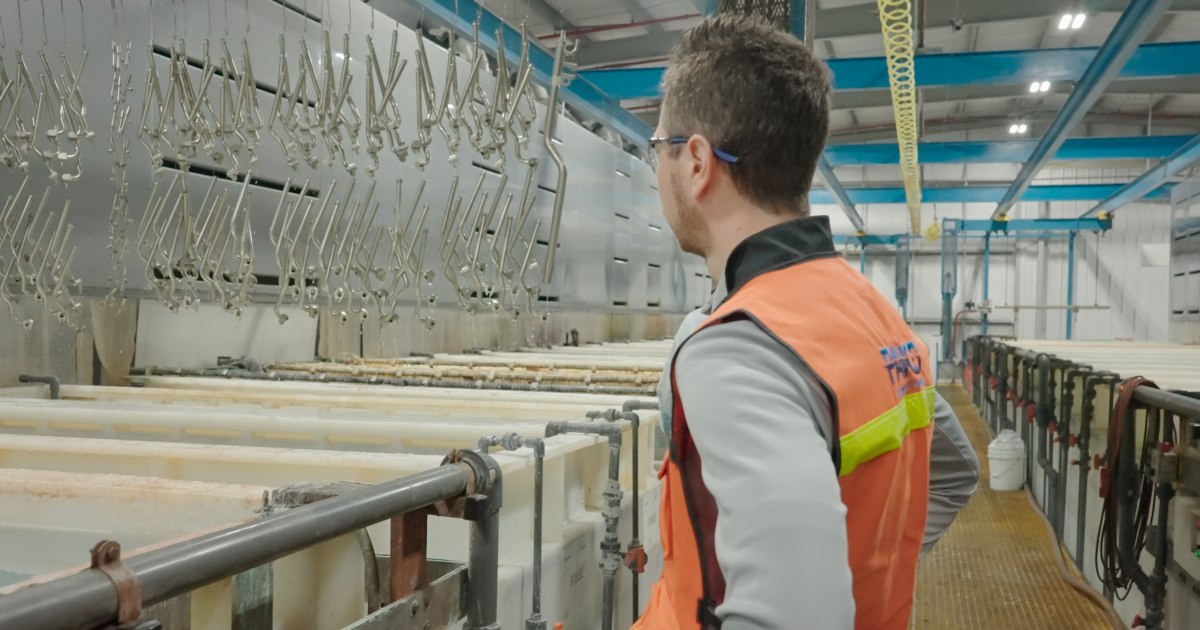
Preventing contamination is key to maintaining high-performance plating, but contamination through drag-in is typical in any production environment and sometimes unavoidable. The goal is not to eliminate all contamination — it is to detect it early and manage it effectively.
Identifying Contamination
Regular bath analyses and Hull cell testing work together to identify changes in the plating that can be caused by various contaminants. Organic contaminants from breakdown products, metallic impurities from drag-in, and particulate matter from the shop environment all leave distinct signatures on Hull cell panels and in analytical results.
When contamination is suspected, referring to the Technical Data Sheet (TDS) for the specific chemistry or contacting your technical service representative is the first step toward identifying the source and developing a plan of action.
Process Controls for Contamination
Several proven process controls help mitigate the effects of common contaminants:
Continuous filtration: The industry standard calls for a filtration to remove particulate matter and maintain bath clarity
Carbon filters : Activated carbon treatment removes organic contaminants that cause dull deposits, haze, and poor adhesion
Dummy plating: Low-current-density electrolysis on dummy cathodes removes metallic impurities from the bath
A technical service partner can help you understand the potential controls you may need for your specific operation. The right combination of filtration, purification, and monitoring ensures that contamination does not compromise your plating quality.
Water Quality
High-quality plating requires high-quality water. This is a fundamental principle that is too often overlooked, yet water quality issues are among the most common root causes of persistent plating defects.
The Impact of Contaminated Water
Adding contaminated water to your plating system can lead to issues with cleaning, plating, and post-treatment processes. Common water-borne contaminants include:
Chlorides: can cause pitting and stress in deposits
Carbonates: reduce bath efficiency and promote roughness
Organics: degrade additive performance and cause pitting or haze
These effects are not limited to bath makeups. Drag-in of rinse waters is a significant and often underestimated source of bath contamination. Contaminated rinse water introduced through drag-in can lead to staining, internal stress in plating deposits, and adhesion failures that are difficult to diagnose without systematic water quality monitoring.
Water Quality Best Practices
Use deionized (DI) water with at least 99% purity for bath makeups and critical rinses
Monitor rinse water quality regularly and establish dump schedules based on conductivity measurements
Ensure consistent water quality across all rinse stations — variations between stations create inconsistent drag-in conditions
Dump old rinses on a defined schedule rather than waiting for visible contamination
Understanding how water quality and surface preparation work together to prevent defects is critical. Learn more about how proper plating from the start avoids costly recoating and why the investment in water quality management pays for itself in reduced rework.
Building a Systematic QC Program
The QC testing protocols outlined above — bath monitoring, Hull cell testing, contamination control, and water quality management — are most effective when implemented as an integrated, systematic program rather than isolated activities.
Documentation and Trending
Every test result, dosing event, and corrective action should be documented and trended over time. This data transforms QC testing from a reactive troubleshooting exercise into a proactive quality management system capable of predicting and preventing problems.
The Partnership Advantage
Working with a technical service partner who understands your specific plating processes and can provide full bath analyses, Hull cell interpretation, and contamination troubleshooting gives your operation a critical advantage. PAVCO's one-on-one technical service model, backed by over 75 years of metal finishing expertise and ISO 9001:2015 certified quality systems, ensures that your QC program has the support it needs to deliver consistent, high-performance results..
Ready to strengthen your QC protocols? Contact a PAVCO® Technical Service Representative to discuss how systematic bath analysis, Hull cell testing, contamination control, and water quality management can improve consistency and profitability across your plating operation.
- Share:
-
![Facebook]()
-
![Twitter]()
-
![Mail]()


Related Articles




IT’S HOW YOU FINISH
We’re a developer and supplier of chemistries for the metal finishing industry since 1948.
In PAVCO, we develop products and deliver services of the highest quality at a reasonable cost.