Plating Tank Maintenance: Maximizing bath life and efficiency
August 03, 2026
August 03, 2026
Regularly fixing a specific issue with plated parts? Regularly replacing a component? Not achieving the plating efficiency you expect? These may be indicators that it is time for your plating tank’s regular checkup! In our daily lives we put time and effort into maintaining our vehicles and our bodies to ensure maximum performance, so why do we not provide the same level of care for our industrial equipment? Taking the time to perform regular maintenance on your plating tank can help keep your operation running smoothly, increase the life of your bath, and maximum efficiency.
Maintaining Tank Cleanliness to Prevent Contamination
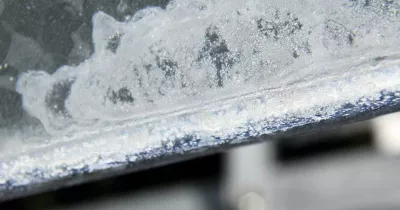
Overall tank cleanliness can have a massive impact on bath efficiency and bath life. Salt buildup on anode rails and the rim of the tank can cause issues beyond contact problems. If they fall into the tank, these salt crystals can lead to pitting or other surface defects; as well as sudden increases in salt concentrations which can affect the balance of components in the bath. Salt buildup which has been sitting for a long time may also hold contaminants which do not need to be introduced to the plating bath.
Drips from transfers can have similar effects. Over time equipment can be damaged depending on the chemistry being dripped. If a rack or barrel is being moved down the line and skipping over tanks, the drips from this movement can contaminate baths and cause issues that may be difficult to diagnose. Line planning is an important step in the process to help minimize contamination in this situation. Putting lids over inactive tanks can be a solution but may not be practical for every line. Dragout contamination cannot be avoided in all cases, but efforts should be made to minimize it when possible.
The area around your plating tank or line should also be kept clean, and not just to prevent workplace safety incidents. A clean plating area has less likelihood of debris and contaminants getting into the bath which can lead to lowered efficiency or plate out situations. Random defects that may be caused by micro-debris can be prevented through keeping the hoist equipment in good condition as well. When performing maintenance on any line equipment, especially overhead equipment, it is critical to take measures to prevent grease and oils from entering process tanks and causing contamination issues. Keeping the environmental contaminants out of the tank will extend the life of the filters on your tank and by proxy extend the life of your plating bath without dramatically increasing filter changes and other related maintenance tasks.
Electrical Component Care for Maximum Plating Pulse
Electricity is the pulse of this industry in many respects and without regular maintenance, poor component condition will lead to a loss of efficiency. Every part of the electrical pathway on a plating tank should be regularly checked. Rectifiers can be calibrated and certified by third-party services to ensure that they are functioning properly. Busing, whether cable or bar, should be checked for corrosion and other signs of damage at connection points and for the length of the run. A voltmeter with clamps can be used to check coated cables for breaks in non-visible areas. Anode connections to the busing system should be regularly checked for tightness and corrosion product buildup between the connector on the anode and the busing system. Any corrosion should be cleaned and these points checked for fastener tightness.
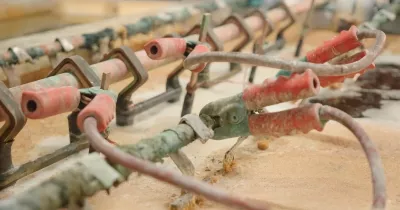
Flight bar/cathode, and anode rail saddles present an area that requires frequent maintenance. With the connection at this point being temporary compared to the rest of the electrical pathway, the surface of the saddle quickly can become coated with corrosion, salts, and general environmental debris. Regular scrubbing of saddle contact surfaces will prevent buildup which results in loss of contact, increased resistance, and possible arcing situations.
Optimizing Liquid Systems: Filtration and Agitation
Regular maintenance of the “circulatory” systems which support the movement and filtration of a plating bath will extend the life of your bath. When we think about solution movement in a plating tank system, we can break this down into two main subsystems: Filtration and Agitation.
Industrial Filtration Maintenance Strategies
Nearly every process tank on a plating line should be connected to some type of filtration system. The type of filtration recommended will depend on the chemistry being filtered but the general concepts remain the same. The right type of filtration should be in place. For example, you don’t want to have a carbon filtration system on a bath with levels of organic based additives requiring tight control. You also do not want to have a filter with pores so small that it filters out parts of the bath that need to remain in solution. Some baths only require filtration to remove additives before a recharge. Always check the Technical Data Sheet for chemistry specific filtration needs or contact your chemical supplier for more details.
Having the right filter system is not the only important thing to keep an eye on. Regularly monitoring filter pressure and performing quality filter changes at regular intervals can not only lower maintenance costs long term for your system but also ensure that your plating bath remains in good condition. Filter changes may also be necessary at off-interval times when pressures indicate there may be a problem. A clogged filter can lead to costly problems if the system builds up enough pressure to crack piping or even blow out components. This not only will require repair but also may require hazardous material cleanup and the cost of a new bath makeup. A clogged or damaged filter can also breach inside the housing. While this may not cause any equipment damage, it can lead to costly problems when your bath is not properly filtered. Example: If you recently changed a filter yet keep getting star dusting or pitting; it may be that the filter was not installed properly and the bath isn’t being filtered sufficiently.
Agitation Methods and Troubleshooting Flow
The other half of solution movement is agitation inside the tank. Whether your plating bath uses air spargers, eductors, filter pump circulation, or mechanical agitation methods, maintenance is still required.
Mechanical Agitation
Mechanical agitation systems should be regularly checked for component wear, and greased/lubricated at appropriate points using a lubricant which is compatible with the bath (if some lubricant ends up in the plating tank during normal operation). Dry or wet, silica or silica-free, there are plethora of options available, and your line may require multiple products.
Air/Liquid Agitation
Systems which move the plating bath through air sparging, eductors, or general circulation through the filtration system should be checked for adequate and unobstructed flow. If your air sparger only puts out air at one end of the tank, then your bath is not moving evenly between ends, and the plating will be affected as a result. Air supplied to agitate a tank should also be filtered to remove oil and other contaminants which may be introduced to the tank from the compressor/blower. Blocked or broken eductors will result in uneven flow or highly reduced flow patterns within the tank.
When considering circulation through the filtration system as a low flow agitation option, making sure that the valves are open to the desired settings and that your solution in pumping in the proper direction (i.e. from the weir (if equipped) through the filter and back to the opposite side of the tank) are all important factors that contribute to maximizing the efficiency of your plating bath.
The Power of Tracking and Maintenance Logs
Now that you are doing the maintenance, it is also important to track it. Whether you choose to use in-depth checklists or something as simple as writing the last filter change date on the housing, tracking maintenance tasks can help you spot patterns in component wear early on which can minimize downtime. Knowing when a task was last performed can help in troubleshooting problems with your tank.
As mentioned earlier, if you suddenly encounter pitting on parts when they come out of a specific tank and the only recent change to the system was the filter change you did the day before, then looking at the filter system first is a logical step in the investigation. If you don’t know when you last changed that filter and it’s not tracked anywhere it could take you a few shifts of running scrap parts before you realize that the filter is the source of your problems.
Connect with a Pavco Expert for Technical Support
Proper maintenance of your plating tank and overall system directly impacts your bath efficiency and your bottom line. We strongly recommend contacting a Pavco technician for expert advice or to resolve any technical questions regarding your tank maintenance. Establish a solid maintenance plan and schedule your checkups before your equipment requires them for you!
- Share:
-
![Facebook]()
-
![Twitter]()
-
![Mail]()


Related Articles

IT’S HOW YOU FINISH
We’re a developer and supplier of chemistries for the metal finishing industry since 1948.
In PAVCO, we develop products and deliver services of the highest quality at a reasonable cost.